How to make money with AI videos: 5 ways that work
You can make money with AI videos in five main ways: YouTube ad revenue, paid clipping campaigns, affiliate links, making videos for businesses, and selling your own product. Each one pays in a different way and has a different catch. No one can promise what you will earn, so this post shows how each works and where the numbers come from. Results vary.
What does "make money with AI videos" mean?
It means you use AI tools to make videos faster, and you get paid because of those videos. The AI does the slow parts, like writing, voice, or editing. You still choose the idea and check the result.
If you are new to the making part, start with how to make faceless AI videos. You can also read how to make AI videos with ChatGPT or with Claude. This post is about the money side.
What are the 5 ways at a glance?
Here is the short version. Each row is explained below, with the source for every rule.
| Way | How it pays | What you need | The catch |
|---|---|---|---|
| YouTube ad revenue | A share of ad money from your videos and Shorts | A channel in the YouTube Partner Program | The entry bar is high and getting higher |
| Paid clipping | A brand pays per 1,000 views or per post | Accounts on TikTok, Instagram or YouTube | Rates are set by each brand, and clips get rejected |
| Affiliate links | A commission when someone buys through your link | An audience and a clear disclosure | Pay depends on sales, not views |
| Videos for businesses | The client pays you a price you agree on | Videos that solve a real problem for a client | You trade time for money |
| Your own product | You keep each sale after platform fees | Something worth buying, and people to show it to | It takes the longest to build |
1. Can you make money with AI videos on YouTube?
Yes, if your channel joins the YouTube Partner Program and follows its rules. Then YouTube shares ad money with you.
How it pays. YouTube's help page says the program lets you share revenue from ads on your content. It also says there are no guarantees about how much or whether you will be paid. Earnings come from a share of the ad money from viewers watching your video.
What you need. Today there are two ways in. You need 1,000 subscribers plus either 4,000 qualified watch hours in the last 12 months, or 10 million qualified Shorts views in the last 90 days. You also need 2-Step Verification on, no active Community Guidelines strikes, and an AdSense account.
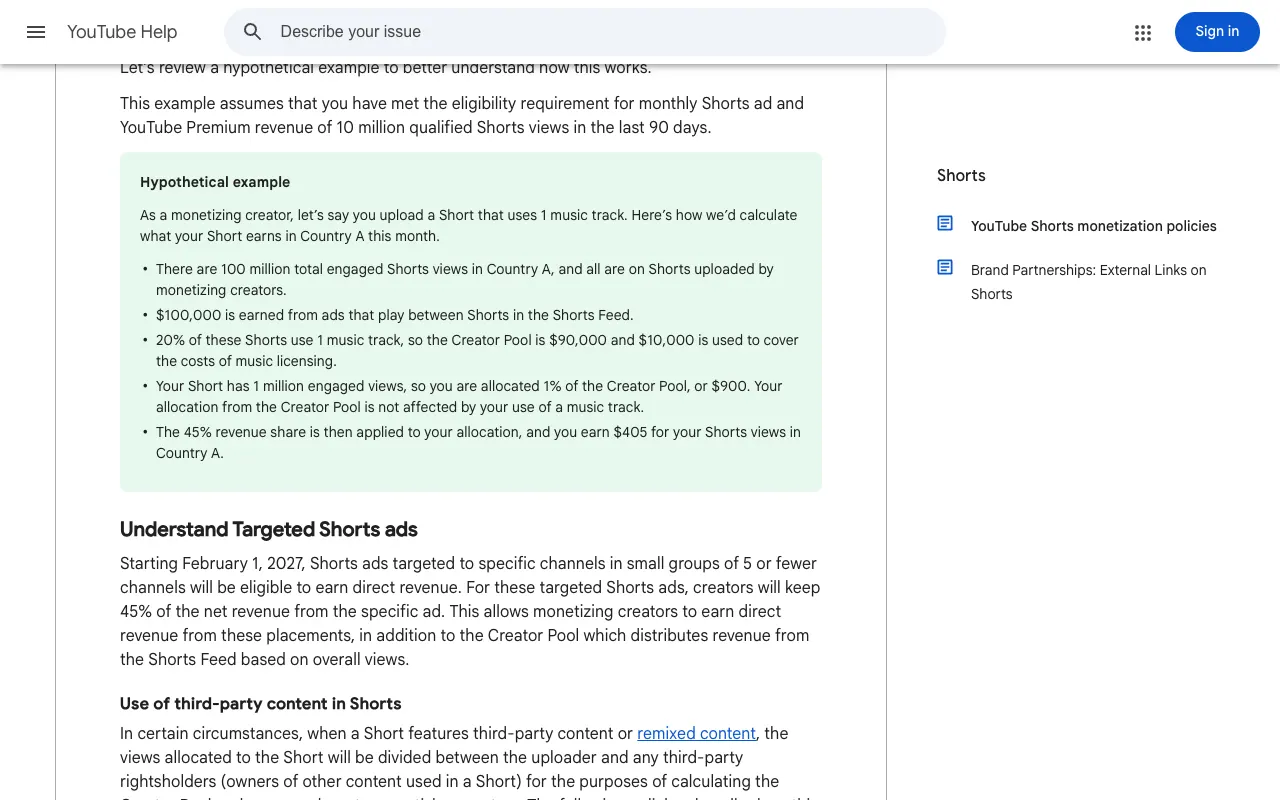
For Shorts, ad money goes into a monthly Creator Pool. YouTube says creators keep 45% of their allocated share. Its hypothetical example is a Short with 1 million engaged views that earns $405 after the 45% share. That is a made-up case, so treat it as a way to see the math, not a rate.
The catch. The bar is going up. YouTube says that starting February 1, 2027, new creators will need 1,000 subscribers plus 8,000 qualified watch hours in the last 365 days, or 20 million qualified Shorts views in the last 90 days. People already in the program are not affected. YouTube also says Shorts Creator Pool money requires 10 million qualified Shorts views in the last 90 days from that date.
There is a second catch for AI videos. YouTube's policy says content that is mass-produced, generic or repetitive is not eligible to earn. That rule was renamed "inauthentic content" in July 2025. A channel that posts the same AI template again and again is the exact case it describes. Make each video worth watching on its own.
For the full platform picture, see how faceless channels make money.
2. Can you make money clipping videos with AI?
Yes, if a brand runs a paid clipping campaign and approves your clips. You post short clips, and the brand pays for the views or posts it approves.
How it pays. Content Rewards says a brand puts up a budget, you make content that fits the brief, and you get paid on what the campaign pays for. Each campaign picks one of four models: pay per 1,000 views (CPM), a flat amount per post, a retainer for an agreed set of videos, or a pool that splits the budget by views.
What you need. A free account, your social accounts connected, and clips that follow the brand's brief. AI helps here. Tools like OpusClip (affiliate link) find the best moments in a long video and cut them into short clips. Read how AI video clipping works for the steps, or how to make money clipping videos for the full guide.
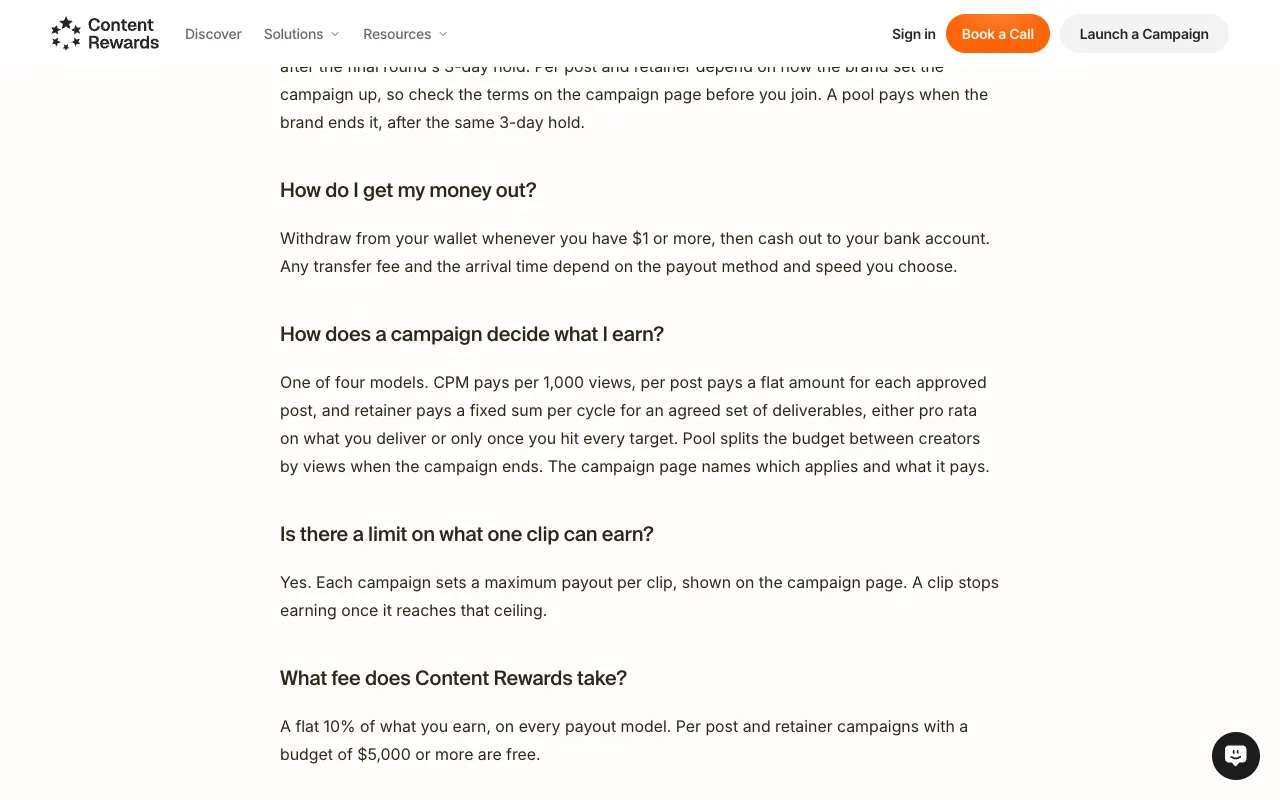
Here is the math as an "if." If a campaign pays $2 per 1,000 views, a clip with 100,000 views earns 100 x $2 = $200. Content Rewards says it takes a flat 10% of what creators earn, so that is $180. Many clips get far fewer views. Results vary. You can plug in your own numbers in the earnings calculator.
The catch. Every submission is reviewed, and nothing approves on its own. The FAQ says rejections are usually about the brief: wrong platform, missing tags or disclosure, reused content, or a post edited or deleted after you submitted it. Each campaign also sets a maximum payout per clip, and a clip stops earning at that ceiling. Payouts come in rounds, about every 10 days on CPM. Learn the details in what is Content Rewards.
3. Can you make money with AI videos using affiliate links?
Yes, if people buy something through your link. You show or explain a tool or product in a video, and the link in your bio or description tracks the sale.
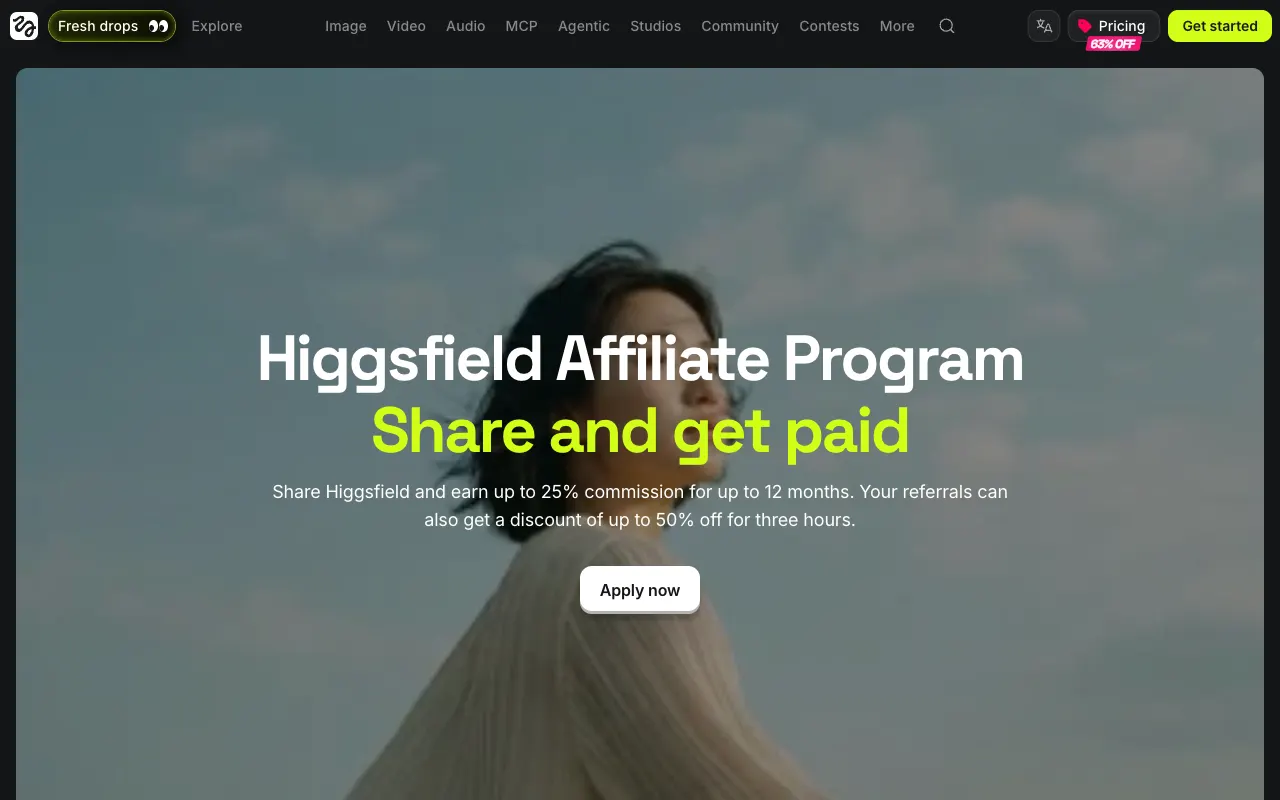
How it pays. Many AI tools pay a commission. ElevenLabs (affiliate link) says its program pays up to 22% of all payments from a new paid subscriber for the first 12 months. Higgsfield (affiliate link) says its program pays up to 25% commission for up to 12 months. Affiliate links: Freed by AI may earn a commission if you sign up through them.
YouTube also has a Shopping affiliate program. YouTube says you can tag products in your content and earn a commission when fans buy on the retailer's site. To be invited, your channel must be in the Partner Program and be based in one of the listed countries.
What you need. A tool you really use, a video that shows it working, and a clear disclosure. The US Federal Trade Commission says you must disclose any financial relationship with a brand, including getting anything of value for mentioning a product. It says to put the disclosure in the video itself, not only in the description, and to use both audio and on-screen text.
The catch. You are paid when someone buys, not when someone watches. A video with many views can still earn nothing. Programs change their terms, so read the program page before you promise anything to your audience. This is not legal advice.
4. Can you make money by making AI videos for businesses?
Yes, if a business pays you for videos it needs. Many small businesses want short videos but do not have time to make them.
How it pays. You and the client agree on a price. That price is yours to set, so no platform can tell you a rate. If you use a marketplace, it takes a fee. Upwork says its freelancer service fee ranges from 0% to 15% per contract.
Here is the math as an "if." If you charge $200 for a package of videos and the fee on that contract is 10%, you keep $180 before your own costs. The $200 is an example, not a market rate.
What you need. A few sample videos and a clear promise, like "five short product videos a week." AI tools can speed up the work. For example, ElevenLabs (affiliate link) makes voiceovers, and Higgsfield (affiliate link) makes AI video clips. Check each tool's license terms before you use its output in client work.
The catch. You trade time for money. Each client is another batch of work, and finding clients takes effort. Clients also care about the result more than the tool. Show what the video did for them, not which AI made it.
5. Can you make money selling your own product?
Yes, if people pay for something you made. Your videos bring in viewers, and a link sends them to the offer. A product can be a template, a guide, a short course, or a set of prompts.
How it pays. You keep each sale after the platform's fee. Gumroad, a store for digital products, lists its fees on its pricing page: 10% plus $0.50 per transaction on sales through your own profile or direct links, and 30% when new customers find you through its Discover marketplace.
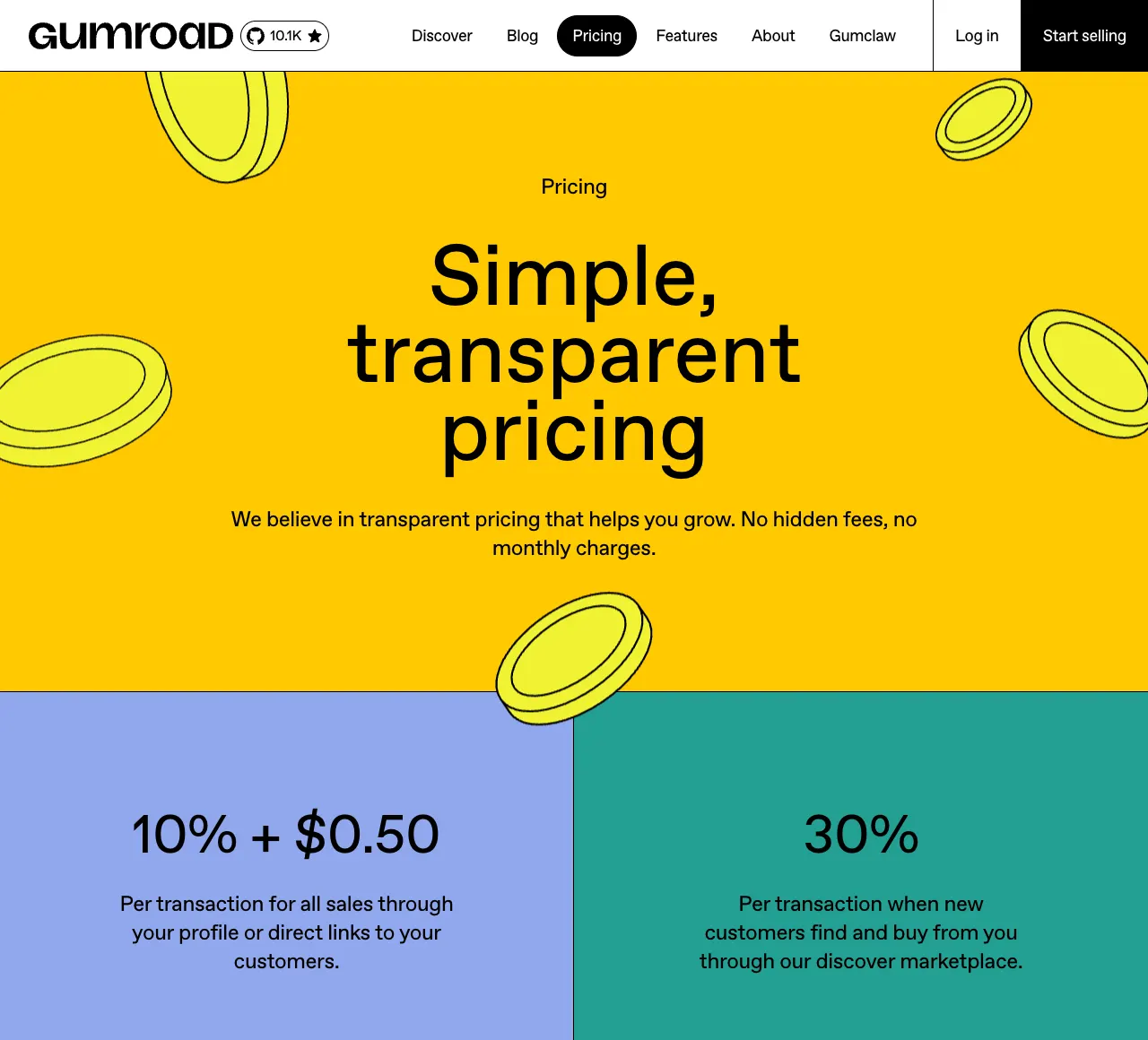
Here is the math as an "if." If you sell a $20 guide through a direct link, the fee is 10% of $20 plus $0.50, which is $2.50. You keep $17.50 before other costs. The $20 price is an example.
What you need. A product people want, a page that explains it, and people who see your videos. A free email sign-up is a good first step, because you own that list.
The catch. It takes the longest. You build the product first, and nothing is paid until someone buys. It also needs real value, since buyers can tell when a product is thin.
Which way should you start with?
Start with the one that needs the least from you right now. Most people do not meet YouTube's bar on day one, so ways 2, 3 and 4 are common first steps.
- No audience yet: try paid clipping or videos for a business.
- Some followers: add affiliate links to tools you already use.
- A steady audience: consider a product or the Partner Program.
Most people mix two or three. Do not count on any one source, and do not spend money you cannot afford to lose.
Do you need to show your face?
No. Clipping uses footage from someone else, and many AI videos use voiceover, screen recordings or AI clips instead of your face. Some ways, like selling a product, can work better with a face, but it is not required to start.
What do you do next?
Pick one way and test it for a few weeks with real posts. Keep a note of views, clicks and money, and compare them to the "if" math above. If you want to see the full process step by step, watch the free training. Othman Tmoulik teaches it, and it is built for people with no experience.
Sources
- YouTube Partner Program overview and eligibility (checked November 2026)
- Changes to the YouTube Partner Program (checked November 2026)
- YouTube Shorts monetization policies (checked November 2026)
- YouTube channel monetization policies (checked November 2026)
- How YouTube pays you (checked November 2026)
- YouTube Shopping affiliate program (checked November 2026)
- Content Rewards FAQ (checked November 2026)
- ElevenLabs affiliate program (checked November 2026)
- Higgsfield affiliate program (checked November 2026)
- Upwork: Freelancer service fee (checked November 2026)
- Gumroad pricing (checked November 2026)
- FTC: Disclosures 101 for Social Media Influencers (checked November 2026)
FAQ
How can I make money with AI videos?
Five main ways: YouTube ad revenue, paid clipping campaigns, affiliate links, making videos for businesses, and selling your own product. Each pays differently, and results vary.
How do you make money with AI videos on YouTube?
Join the YouTube Partner Program, then earn a share of ad revenue. Today you need 1,000 subscribers plus 4,000 watch hours or 10 million Shorts views. The bar rises for new creators on February 1, 2027.
Can I make money with AI videos without showing my face?
Yes. You can use voiceover, screen recordings, AI clips, or clips from someone else's content. Clipping and faceless channels both work without your face.
How much money can you make with AI videos?
No honest source can give one number. Pay depends on views, the rate, and the way you choose. Use "if" math with a real rate, such as $2 per 1,000 views, and your own view counts.
Do I have to disclose affiliate links?
Yes. The FTC says to disclose any financial relationship with a brand, in the video itself and not only in the description. This is not legal advice, so read the guidance.
Is it okay to post AI videos on YouTube?
Yes, if they follow YouTube's rules. YouTube says mass-produced, generic or repetitive content is not eligible to earn, so each video needs real value of its own.
Get the free training first
It's coming soon. Join the waitlist and you'll hear first.
No spam. Unsubscribe anytime.
Keep reading
Affiliate disclosure: some links in articles may be affiliate links. If you buy through one, Freed by AI may earn a commission. That does not change the price you pay.